
CNC Machining vs Casting: Which Process Is Better for Your Parts?
When manufacturing metal parts, choosing the right process directly affects cost, precision, and delivery time. CNC machining and casting are two of the most widely used methods, but they serve very different purposes.
Understanding their differences can help you avoid unnecessary costs and production risks.
What Is CNC Machining?
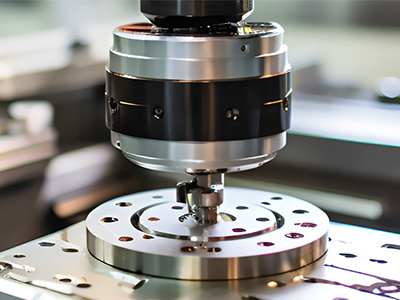
CNC machining is a subtractive process where material is removed from a solid block using computer-controlled cutting tools. It is known for high precision, excellent surface finish, and flexibility.
This process is commonly used for:
- Precision components
- Functional prototypes
- Low to medium volume production
- Parts with tight tolerances
What Is Casting?
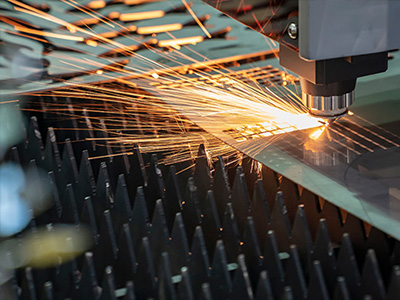
Casting is a process where molten metal is poured into a mold and solidified into shape. It is more suitable for large-volume production and parts with complex geometries.
Casting is typically used for:
- High-volume production
- Complex internal structures
- Large-size components
- Cost-sensitive mass production
CNC Machining vs Casting: Key Differences
Precision
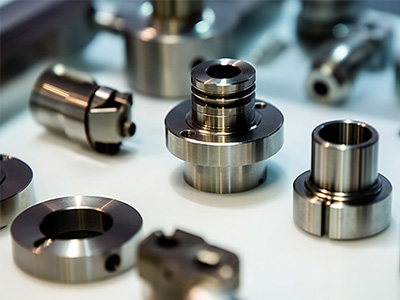
CNC machining can achieve very tight tolerances, often up to ±0.01 mm. Casting accuracy depends on mold quality and usually requires additional machining for critical areas.
Surface Finish
Machined parts typically have a smooth surface and can be used directly. Cast parts often require secondary processing such as machining or polishing.
Cost
For small quantities, CNC machining is more cost-effective since no tooling is required. For large volumes, casting becomes more economical due to lower unit cost.
Lead Time
CNC machining offers faster turnaround because it does not require molds. Casting involves mold design and production, which increases lead time.
Flexibility
CNC machining allows quick design changes. Casting requires new molds if the design changes, which increases cost and time.
When Should You Choose CNC Machining?
CNC machining is the better option when:
- You need high precision and consistency
- The quantity is low or medium
- You want fast delivery
- The design may change during development
Typical materials include aluminum, stainless steel, brass, copper, and engineering plastics.
When Should You Choose Casting?
Casting is more suitable when:
- The production volume is high
- The part has complex internal geometry
- Cost per unit needs to be minimized at scale
However, casting often requires post-machining to meet tight tolerances.
Cost Considerations
One of the biggest misunderstandings is that casting is always cheaper.
In reality:
- For prototypes or small batches → CNC machining is usually cheaper
- For large-scale production → casting becomes more cost-effective
Choosing the wrong process can significantly increase total cost.
How to Make the Right Decision
There is no universal answer. The best process depends on:
- Quantity
- Tolerance requirements
- Material
- Budget
- Delivery time
In many cases, a combination of casting and CNC machining is used to achieve both cost efficiency and precision.
Work With an Experienced CNC Machining Supplier
At Biyou, we support global OEM clients with precision CNC machining services, from prototypes to production parts.
We help you evaluate your design and choose the most cost-effective manufacturing process.
If you are unsure whether CNC machining or casting is better for your parts, feel free to contact us.
Get a fast quote:
https://www.cnchanding.com/quote/
FAQ
Is CNC machining more expensive than casting?
For small quantities, CNC machining is usually cheaper. For large volumes, casting becomes more cost-effective.
Which process has better precision?
CNC machining offers much higher precision compared to casting.
Can casting replace CNC machining?
Not completely. Casting is often combined with CNC machining to achieve final precision.
Which is better for prototypes?
CNC machining is the best choice for prototypes due to speed and flexibility.